
Derivative Formulas
Topic: Properties of Derivatives. Derivation of Derivative Properties.
Summary
As we know, there are rules for computing the derivative of addition, subtraction, multiplication, division and multiplication of functions:
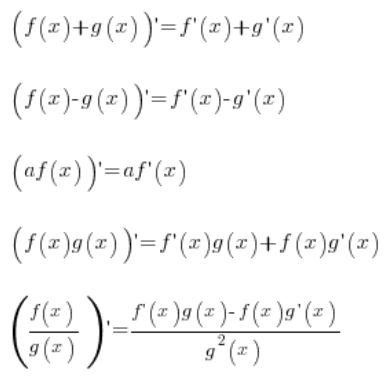
They allow us to compute derivatives of more complex mathematical creatures, such as:

In this lecture we will derive all the properties of derivatives, one by one, directly from the definition of the derivative 🙂
1.  – derivative of addition
 – derivative of addition
Take a function consisting of the sum of two other functions: 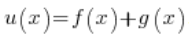 . We must show that the derivative of such a function equals the sum of the derivatives of functions f and g. We assume that functions f and g have derivatives at point x.
From the definition, the derivative of function u at point x equals:
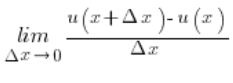
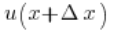 we compute by substituting into the formula for u(x): everywhere instead of x the expression
  , that is:

The formula for  is assumed, therefore:
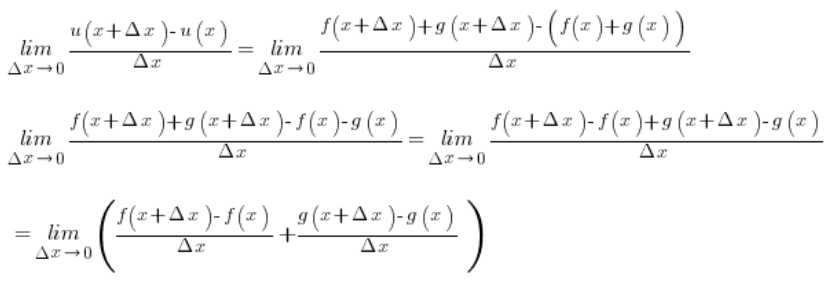
The first term is the derivative of function f at point x from the definition (as  ), and the second term is the derivative of function g at point x from the definition. We assumed both derivatives exist, therefore we can write:

Thus we have proved this property.
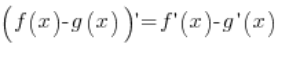
2. – derivative of subtraction
 – derivative of subtraction
Take a function consisting of the difference of two other functions: 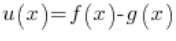 . We must show that the derivative of such a function equals the difference of the derivatives of functions f and g. We assume that functions f and g have derivatives at point x.
From the definition, the derivative of function u at point x equals:
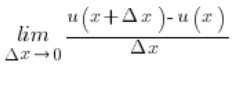
we compute by substituting into the formula for u(x): everywhere instead of x the expression , that is:

The formula for is assumed, therefore:
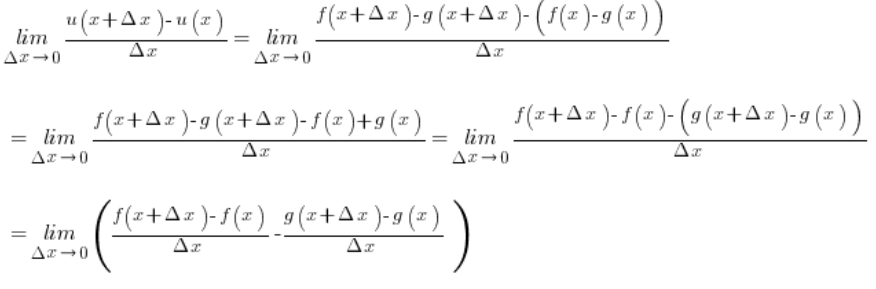
The first term is the derivative of function f at point x from the definition (as ), and the second term is the derivative of function g at point x from the definition. We assumed both derivatives exist, therefore we can write:

Thus we have proved this property.
Generalization of properties 1 and 2
Properties 1 and 2 can easily be generalized to the case of a sum/difference of not just two functions, but of any number 'n’ of functions:
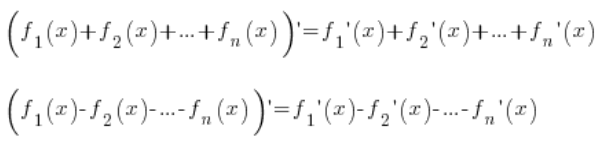
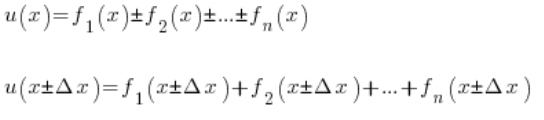
We proceed analogously as in the proof for two functions, taking:
3. – factoring out a constant
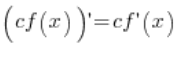 – factoring out a constant
Take a function consisting of a constant multiplied by another function: 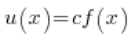 . We must show that the derivative of such a function equals the constant c multiplied by the derivative of function f. We assume that function f has a derivative at point x.
From the definition, the derivative of function u at point x equals:
we compute by substituting into the formula for u(x): everywhere instead of x the expression , that is:
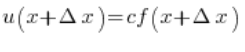
The formula for is assumed, therefore:
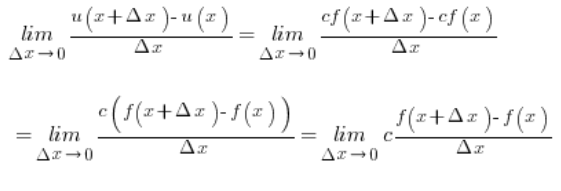
The fraction in the expression is the derivative of function f at point x from the definition (as ). We assumed this derivative exists, therefore we can write:
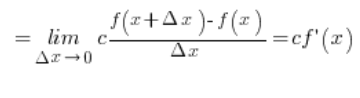
The property is therefore proved.
4. – derivative of multiplication
 – derivative of multiplication
We take a function consisting of the product of two other functions: 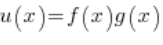 . We must show that the derivative of such a function equals the derivative of function f multiplied by function g plus function f multiplied by the derivative of function g. We assume that functions f and g have derivatives at point x.
From the definition, the derivative of function u at point x equals:
In the proof of this property, it will be convenient to adopt slightly different notation than we have used so far — for clarity. This is also a great test for you: do you really understand what the definition of the derivative means, or have you just memorized the formula mechanically?
In the definition of the derivative of function u we have the expression: . Notice that THE SAME THING (the value of function u at point x increased by increment  ) can be written DIFFERENTLY:
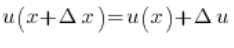 — that is, as the value of function u at point x plus some increment of the value of function u.
STOP HERE — IF YOU DO NOT UNDERSTAND THIS, DO NOT CONTINUE 🙂
We know that if by assumption , then:

Using our modified notation (which can also be applied to functions f and g):

From the assumption — using it on the left-hand side and expanding the brackets on the right-hand side we obtain:

After simplification:

Now notice that returning to our derivative computed from the definition:
The expression in the numerator: 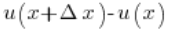 is exactly our increment of the value
  , because an increment equals the value at the increased point minus the value at the original point. Again, it is essential that you pause here and, if necessary, return to the definition of the derivative to understand why:
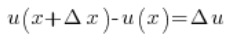
And consequently:
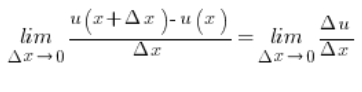
we computed a few lines above:
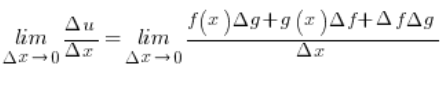
Thus:
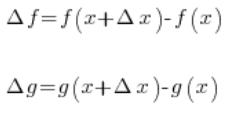
The increments of functions f  and g
and g  equal respectively (according to our notation):
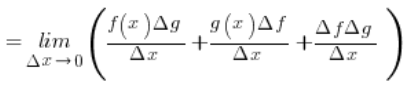
Therefore we obtain the limit:

Notice that in the first two terms we have derivatives of functions f and g from the definition (which we assumed exist) — and what about the third term? Let us rewrite it separately:
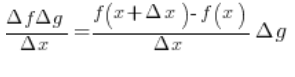
We therefore have the derivative of function f at point x (some value) multiplied by something that tends to zero (the increment of g clearly tends to zero as ), hence the whole term tends to zero.
The third term in the expression:

… tends to zero, and we obtain:
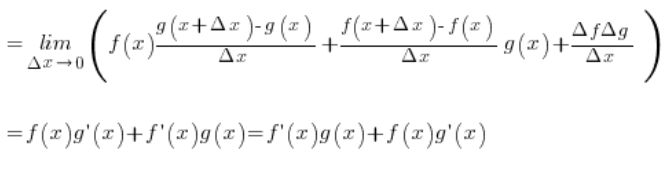
… which was to be proved.
5. – derivative of division
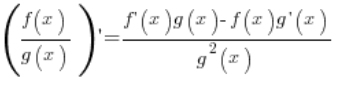 – derivative of division
We take a function consisting of the quotient of two other functions: 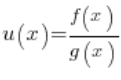 . We must show that the derivative of such a function equals the function given in the formula. We assume that functions f and g have derivatives at point x, and that function g takes a non-zero value at the point where we compute the derivative.
From the definition, the derivative of function u at point x equals:
We have:
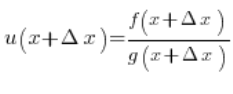
Switching to the notation used in proving the product rule:
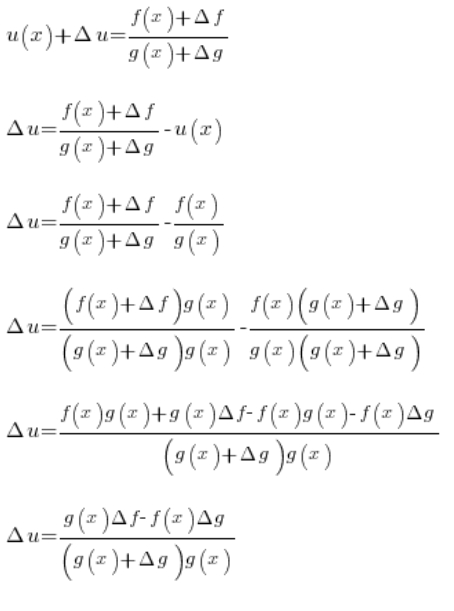
And as we know from point 4, we can write:
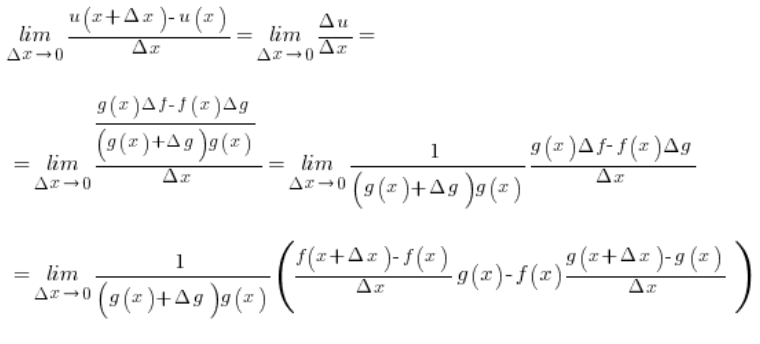
The expressions in parentheses are derivatives of functions f and g at point x from the definition.  as , therefore we obtain the formula:

Which was to be shown 🙂
END
Click to see how to prove the formula for the derivative of a composite function (next Lecture) –>